My Parents' Secret Code - And Why Every Indian Shopkeeper Has One
Ever walked into a small shop, bargained over an item, and watched the shopkeeper instantly know how low they could go? Did you ever wonder how they remember the exact cost of every single product in their store?
For years, I thought my parents had some kind of superpower.

They ran a fancy & gift articles shop in a small town. Hundreds of products - decorative items, photo frames, fancy stationery, showpieces, things you'd give someone for a wedding or birthday. And in India, bargaining is just how things work. A customer would pick something up, ask the price, and the negotiation would begin. My parents never hesitated. They'd quote a price, listen to the counter-offer, and know instantly whether they could go lower.
I assumed they had everything memorized. It seemed impossible, but what other explanation was there?
The real answer came on a Sunday morning when I was in 3rd grade.

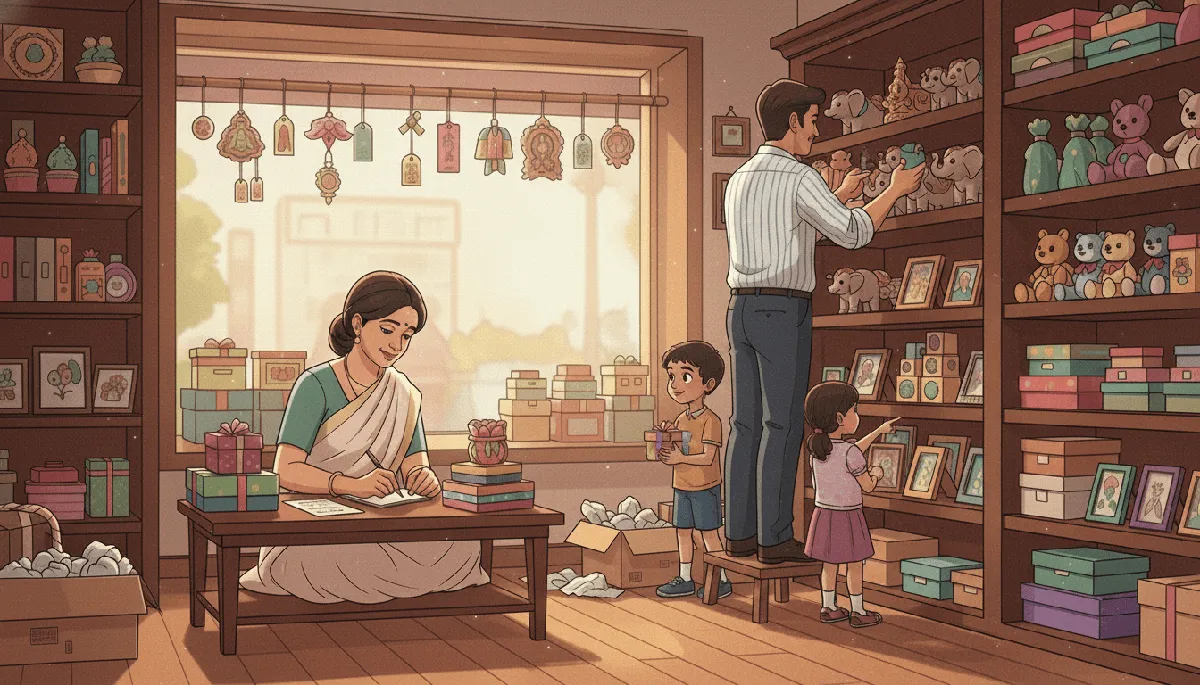
Sundays were special in our house. That's when we'd open the new inventory together. We'd sit in our living room surrounded by cardboard boxes, and my parents would unpack everything that had arrived that week. Each gift item had its own unique thing going on - intricate designs, unusual colors, clever mechanisms. I'd go through them amazed.
My parents would have a sheet from the supplier listing each product with an ID and the cost we paid. They'd check each item against the sheet, and then my mom would write something on the product box. I never paid attention to what she was writing. I was too busy looking at everything.
After that was done, we'd head to the shop to rearrange the shelves. The entire week after, I'd feel this burst of excitement when a customer asked about the new items. I'd know exactly where they were and bring them up like I had secret knowledge.
But that particular Sunday, I finally asked: "What are you writing on them?"
My mom smiled. "It's a business secret."
I leaned in closer. She explained that she was writing the actual cost of each item, but in a code that only she and my dad could read. Not the customers. Not even the staff. The cost was right there on the product, hidden in plain sight.
The system was simple but clever. Each letter of the alphabet was assigned a number, 0 through 9. They used a specific word - something like "LCADBURYSG" - where each letter represented a digit in order.
| L | C | A | D | B | U | R | Y | S | G |
|---|---|---|---|---|---|---|---|---|---|
| 0 | 1 | 2 | 3 | 4 | 5 | 6 | 7 | 8 | 9 |
When they wrote the cost, they'd convert the price into letters using this key. But here's the trick: they'd add random letters at the beginning and end. So if an item cost ₹450, they might write "XBULY" - where X and Y were noise, and BUL in the middle spelled out 4-5-0.
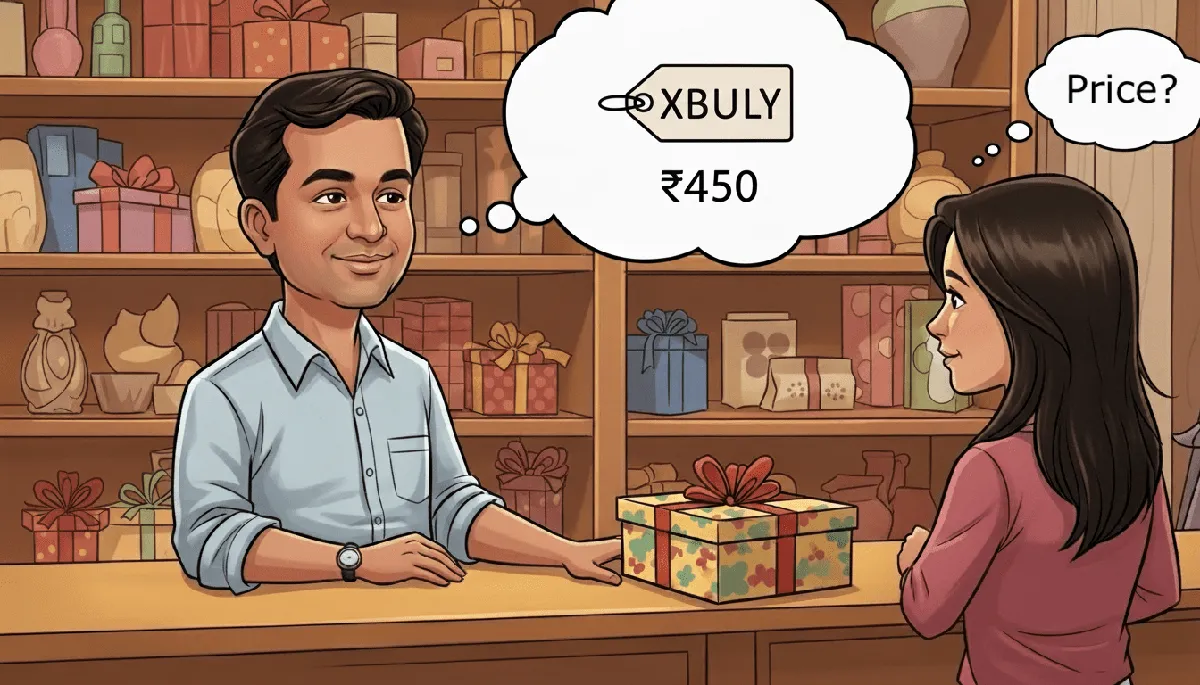
When a customer bargained, my parents would glance at the code, mentally strip away the first and last letters, and instantly know their cost. They could calculate their margin on the spot. All of this happened in seconds, while talking to the customer.
If you asked them the price of something, they just knew it by looking at the product.
After all these years, I'm still impressed by how elegant it was. No computers, no apps, no price lists to look up. Just a simple cipher that solved everything - tracking costs across hundreds of items, enabling flexible pricing, and keeping that information private.
I later learned tons of small retailers used similar systems. It wasn't unique to my parents. It was just how things worked.
I'm a product manager now, working with apps. And sometimes I think about my parents standing in that shop, glancing at a few letters on a tag and instantly knowing their numbers. No loading screens, no queries, no looking anything up. Just a word they memorized and some quick mental math. Now, whenever I build apps, I try to match that kind of elegance.